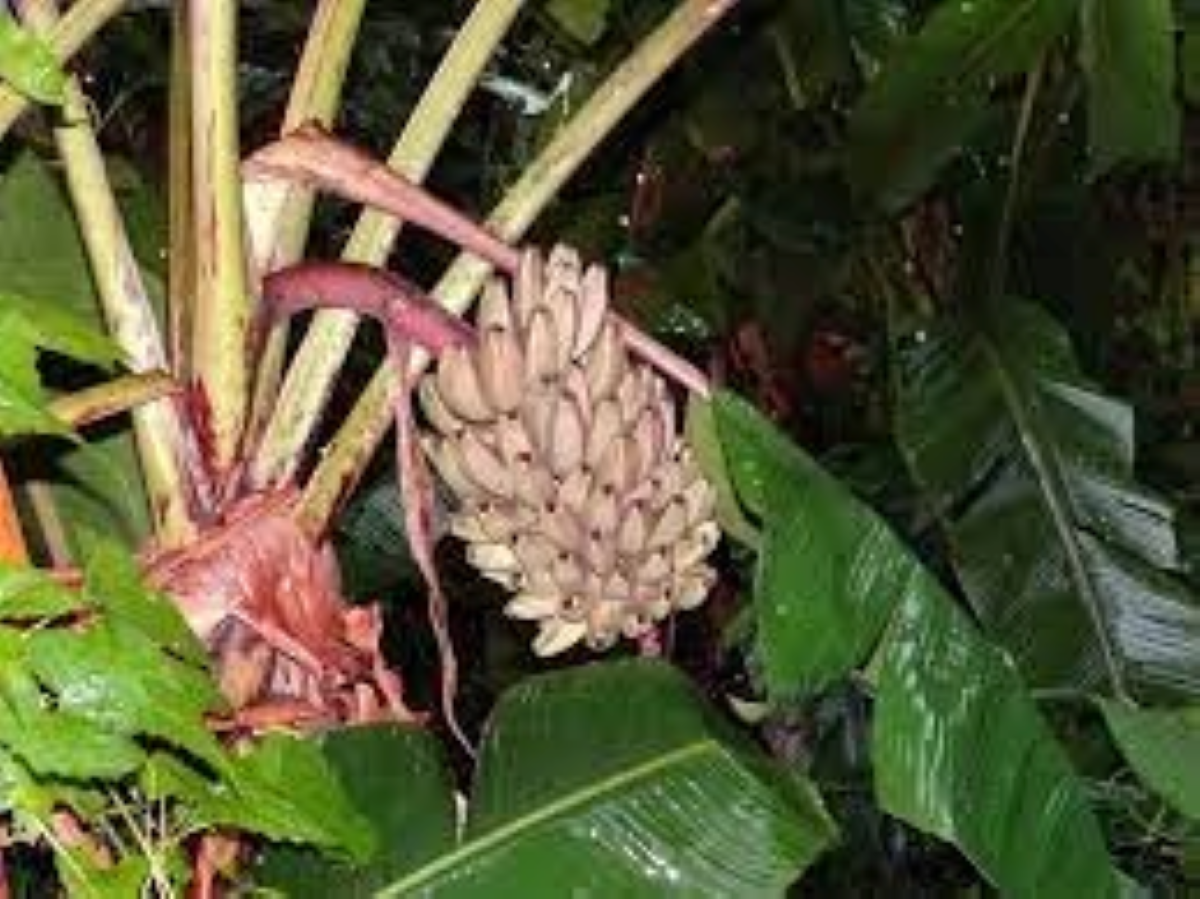
Nagaland University researchers conducted an extensive study on the genetic diversity of Musa sikkimensis, a wild banana species native to the Eastern Himalayas and Northeast India, emphasizing its vital role in climate resilience, food security, and sustainable agricultural development. Commonly referred to as ‘Darjeeling banana’ or ‘Sikkim banana’, Musa sikkimensis serves as an essential genetic reservoir for traits such as disease resistance, stress tolerance, and climate adaptability, making it key for future banana improvement programs despite its limited cultivation for fruit consumption. The research revealed that the local banana germplasm demonstrates strong adaptive potential across diverse environmental conditions, underscoring the necessity for conservation and breeding initiatives.
Located within the Indo-Burma biodiversity hotspot, Nagaland features a rich diversity of indigenous banana genotypes; however, increasing anthropogenic activities, environmental pressures, and deforestation threaten many of these wild genotypes with decline and potential extinction, thus necessitating critical conservation research. The study titled ‘Exploring the Genetic Diversity of Musa sikkimensis Land Races in Nagaland, India’ highlights the urgent need to conserve endangered banana germplasm in this biologically rich region and was published in Flora and Fauna, a peer-reviewed scientific journal.
Co-authored by Nagaland University research scholars K. R. Singh, Dr. S. Walling, and Dr. A. Sarkar, the research reflects a commitment to safeguarding wild flora and enhancing genetic resilience in response to climate change. Prof. Jagadish K. Patnaik, Vice-Chancellor of Nagaland University, emphasized that the initiative aligns with the university’s responsibility towards local genetic resources and traditional ecological wealth, asserting it will contribute significantly to future crop improvement programs.
This study builds upon a series of research projects supervised by Dr. A. Sarkar, focusing on banana biodiversity, germplasm mapping, and the characterization of wild species in Nagaland. Dr. Sarkar pointed out the challenges faced in conserving local banana genotypes in remote forest areas, highlighting the collaboration with banana experts and the documentation of previously unclassified genotypes. Furthermore, the research identified barriers including difficult terrains, limited access to remote regions, and a lack of farmer awareness about germplasm conservation, noting a growing trend among farmers toward hybrid and tissue-culture banana varieties, which may pose risks to traditional and wild genotypes.