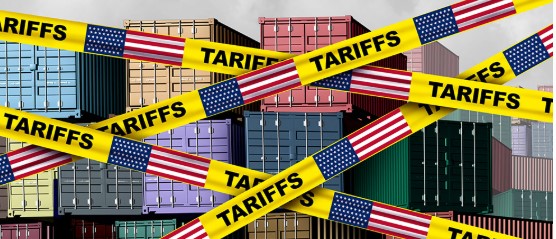
The U.S. fiscal landscape was upended on February 20, 2026, following a landmark 6-3 Supreme Court decision that struck down the Trump administration’s use of the International Emergency Economic Powers Act (IEEPA) to unilaterally impose “reciprocal” tariffs. Throughout 2025, these aggressive levies—targeting major trading partners like China, Mexico, Canada, and India—pushed annual tariff revenues to a staggering $287 billion, a nearly 200% increase over the previous year. However, with the Court ruling that the executive branch exceeded its statutory authority, this massive “windfall” is now being reclassified as an illegal tax. Economists from the Penn Wharton Budget Model and the Yale Budget Lab estimate that the Treasury may be forced to issue up to $175 billion in refunds to importers. This represents a seismic shift from the administration’s plan to use these funds for deficit reduction and military spending, potentially injecting a massive, unplanned stimulus into the economy that would essentially erase the fiscal gains celebrated just months ago.
This legal reversal has thrown the White House’s “One Big Beautiful Bill Act” (OBBBA) into disarray, as the legislation relied heavily on these revenues to offset the rising national debt. While the administration has hinted at pivoting to Section 122 of the Trade Act of 1974 to maintain a 10% universal tariff, any such move would require congressional approval within 150 days—a difficult feat with midterm elections approaching. Currently, the $133.5 billion collected under IEEPA authorities stands as a looming federal liability. Importers typically have a 180-day window to file for refunds once a duty is deemed illegal. If these claims are processed, the 2026 budget deficit is projected to widen to 6.7% of GDP, saddling the government with the added burden of interest costs on the returned cash.
For the private sector, the ruling offers a mix of relief and logistical hurdles. Research from the New York Fed indicates that nearly 90% of the 2025 tariff burden fell on domestic firms and households, costing the average American family roughly $2,600 last year. While the return of $133 billion could provide vital liquidity to retailers and manufacturers struggling with high costs for steel and electronics, the long-term damage—including record bankruptcy rates and stagnant job growth—remains a concern. As the Treasury prepares for a historic wave of refund claims, the national debate has shifted from the feasibility of replacing income tax with tariffs to whether the federal government can sustain its current spending without the emergency revenue it has now been ordered to relinquish.