
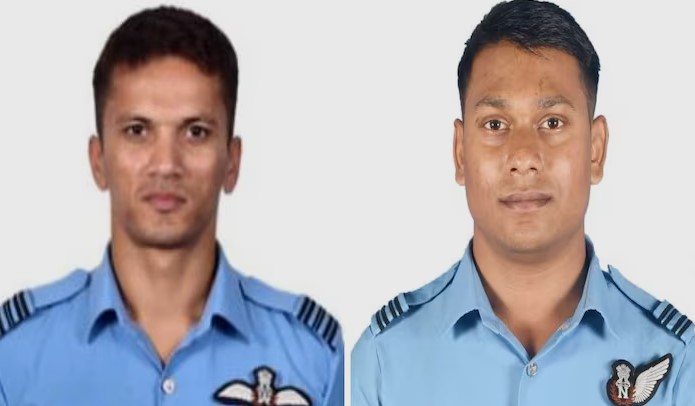
In a heartbreaking incident for the Indian Air Force (IAF), two pilots were killed when their Sukhoi Su-30MKI fighter jet crashed in the rugged terrain of Assam’s Karbi Anglong district. The aircraft, which was on a routine training mission, took off from the Jorhat airbase on Thursday evening, March 5, 2026, before losing radar contact at approximately 7:42 PM. Following an intensive search and rescue operation hampered by the region’s dense forests and hilly geography, the IAF officially confirmed on Friday that both officers on board—Squadron Leader Anuj and Flight Lieutenant Purvesh Duragkar—sustained fatal injuries in the crash. Local residents in the Bokajan sub-division reported hearing a massive explosion and seeing smoke rising from the hills near Chokihola village, which eventually helped search teams pinpoint the wreckage approximately 60 kilometers from the Jorhat base.
The loss of the two experienced pilots has cast a pall of gloom over the nation, with senior leadership expressing profound grief and solidarity with the bereaved families. Defence Minister Rajnath Singh and Assam Chief Minister Himanta Biswa Sarma were among the first to pay tribute, praising the courage and dedicated service of the fallen airmen. In an official statement, the IAF extended its deepest condolences, stating that the entire force stands firmly with the families in this time of immense grief. The Sukhoi Su-30MKI, a twin-seater Russian-origin multirole fighter built under license by Hindustan Aeronautics Limited (HAL), is a cornerstone of India’s air defense, and this accident has once again raised concerns regarding the safety and maintenance of the aging fleet despite its formidable reputation as a frontline combatant.
The Indian Air Force has ordered a formal Court of Inquiry to investigate the exact cause of the crash, as the aircraft gave no prior indication of technical distress before disappearing from radar screens. Preliminary reports suggest that the challenging weather conditions and the remote, forested nature of the crash site necessitated a complex recovery operation involving both ground troops and aerial surveillance. This tragedy marks another somber chapter in the history of the Su-30MKI in India, following similar incidents in Maharashtra and Madhya Pradesh in previous years. As the investigation gets underway to determine whether the crash was a result of technical failure or environmental factors, the nation mourns the loss of two of its finest defenders who made the ultimate sacrifice in the line of duty


